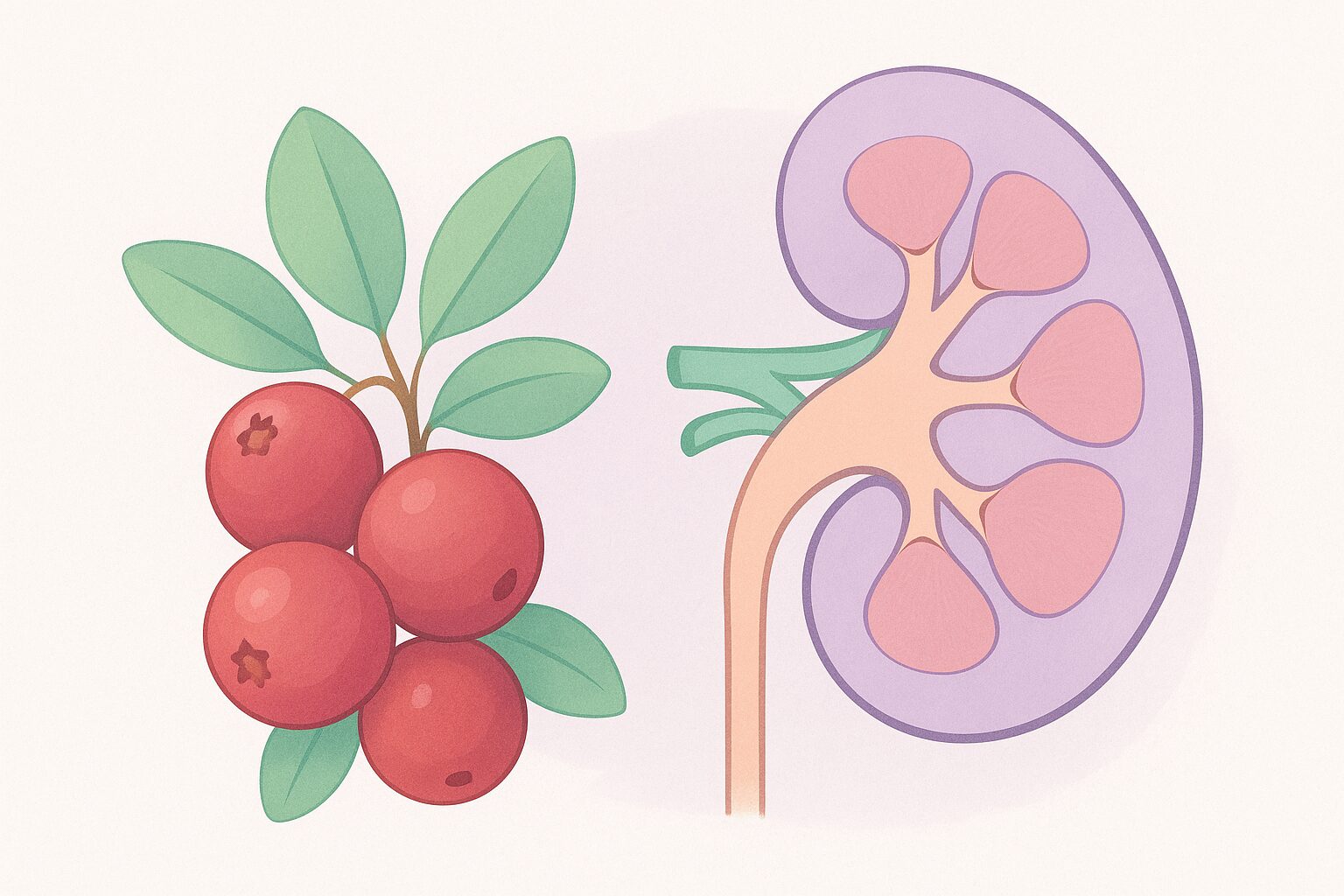
Cranberries are the rare ‘kidney food’ that actually clears the evidence bar. A 2023 Cochrane review of 50 trials concluded that cranberry products reduce the risk of recurrent urinary tract infections (UTIs) in women, children and people with neurogenic bladder. What they don’t do is ‘detox’ the kidney directly — the mechanism is bacterial adhesion blockade, not filtration support.
The mechanism: PACs block E. coli
Cranberries contain type A proanthocyanidins (PACs) that prevent uropathogenic E. coli from adhering to the urothelium. No adhesion → no colonization → no UTI. This is bacterial mechanics, not kidney detoxification.
Dosing and forms
| Form | Effective dose | Notes |
|---|---|---|
| Unsweetened juice | 240 ml (8 oz) daily | Tart; can dilute with water |
| Whole cranberries | 1/2 cup daily | Fresh or frozen, no added sugar |
| Standardized capsule | 36 mg PAC-A daily | Most studied form for prevention |
| Cranberry cocktail | Avoid | Too much sugar dilutes any benefit |
Who shouldn’t use cranberry concentrate
- People on warfarin — possible INR interaction
- History of calcium-oxalate stones — cranberries are moderate oxalate
- Active acute UTI — cranberry is for prevention, not treatment (antibiotics needed)
- CKD stage 4+ — discuss any new supplement with nephrology
For the full evidence map, see our Evidence-Based Kidney Detox Foods pillar.
Frequently Asked Questions
Will cranberries dissolve kidney stones?
No. Cranberries don’t dissolve stones and can mildly raise oxalate excretion. For stones, see our lemon water article and a urologist.
How long until UTI prevention kicks in?
Trials measure recurrence over 6–12 months. Don’t expect a quick fix from one glass.
Juice vs capsule?
Capsules with standardized PAC-A are more reliable. Juice works but doses vary.
Sources & Further Reading
- Cochrane — Cranberries for UTI prevention (2023)
- NIH ODS — Cranberry Fact Sheet
- Mayo Clinic — Cranberry Juice and UTIs
This article is for educational purposes. James Rivera is a researcher, not a physician. If you have chronic kidney disease (CKD), are on dialysis, take prescription medication, or are pregnant, consult your nephrologist before changing your diet.