For people with chronic kidney disease (CKD) — and increasingly for anyone with reduced eGFR — the foods you remove matter more than the ones you add. Excess sodium drives blood pressure, phosphate additives accelerate vascular calcification, and high-potassium foods can cause life-threatening arrhythmias in stage 3–5 CKD. This guide is built from the NKF, NIH NIDDK and KDOQI recommendations.
Foods to avoid: the master list
| Category | Specific items | Why |
|---|---|---|
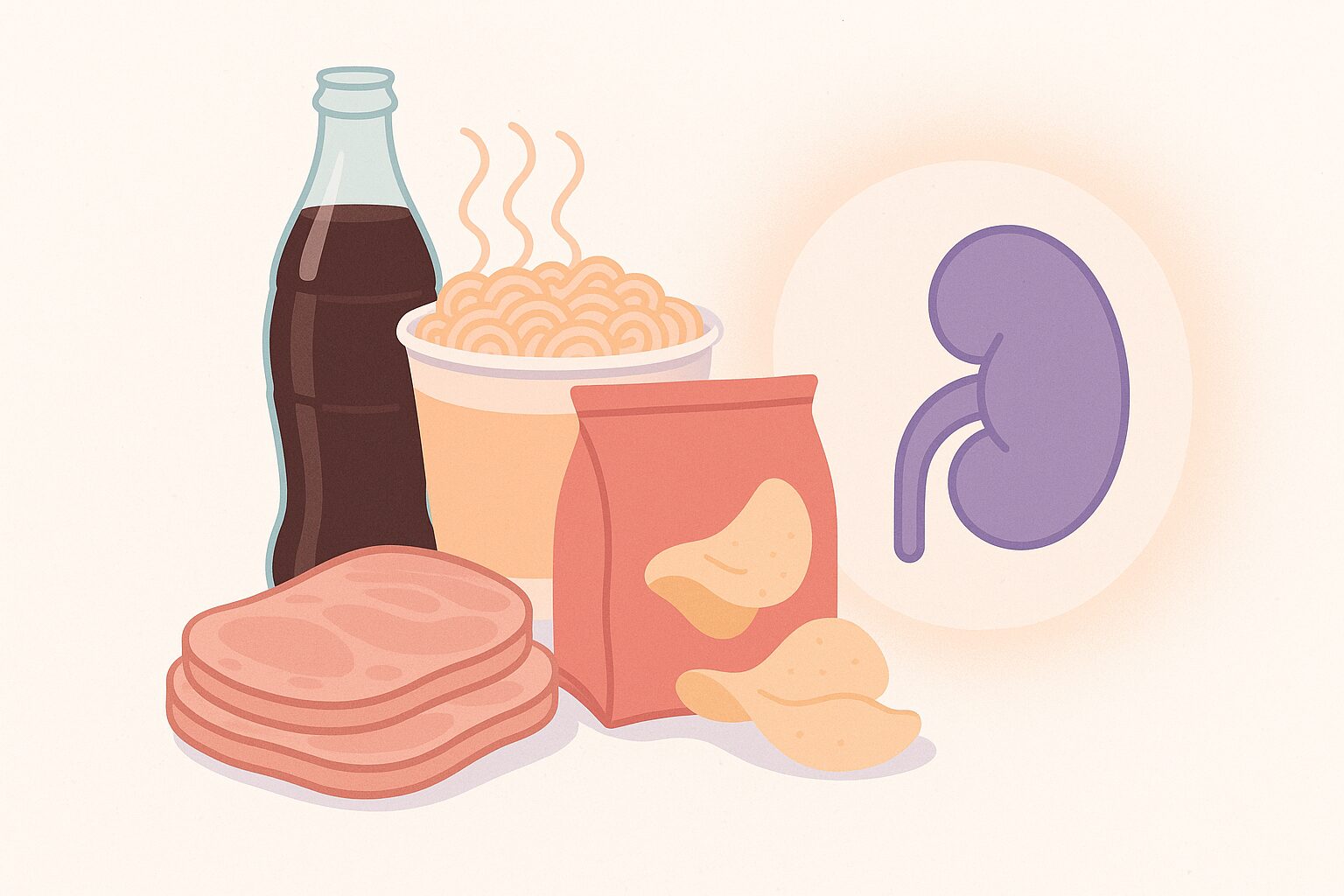
| Processed meats | Bacon, deli ham, hot dogs, sausages | Sodium + phosphate additives |
| Fast food | Burgers, fries, fried chicken | Sodium load + saturated fat |
| Dark sodas / colas | Coca-Cola, Pepsi, Dr Pepper | Phosphoric acid (inorganic phosphate) |
| High-K fruits (stage 3+) | Bananas, oranges, kiwis, dried fruit | Hyperkalemia risk |
| High-K vegetables (stage 3+) | Potatoes, tomatoes, spinach, beet greens | Hyperkalemia risk |
| High-phosphorus | Cheese, organ meats, dark colas, processed snacks | CKD-MBD progression |
| Salt-laden condiments | Soy sauce, bouillon, ketchup, salad dressings | Sodium load |
| Star fruit (carambola) | Any form | Neurotoxic in CKD — avoid completely |
Sodium: the #1 lever
The American diet averages 3400 mg sodium/day. The KDOQI target for CKD is <2300 mg, with stronger BP control at <1500 mg. Most of this sodium is not from the salt shaker — it’s hidden in bread, cheese, sauces, canned soup and restaurant meals. Cooking at home from whole ingredients is the single most impactful CKD diet change you can make.
Phosphate additives: the silent driver
Inorganic phosphate (from food additives) is absorbed at ~90% — vs ~40–60% for natural food phosphorus. In CKD it accumulates and accelerates vascular calcification. Scan ingredient lists for: phosphoric acid, sodium tripolyphosphate, monosodium phosphate, dicalcium phosphate, sodium hexametaphosphate. If you see ‘phos-‘ anywhere on a label, put it back on the shelf.
Potassium: stage-dependent
Healthy people benefit from high-potassium diets — they lower blood pressure. But in CKD stage 3 and worse, kidneys lose the ability to excrete excess potassium, and serum K above 5.5 mmol/L is medically urgent. Get your potassium target from your nephrology team and adjust food choices accordingly. Combine this with our CKD Diet Basics guide for the full picture.
Frequently Asked Questions
Can I ever have salt again with CKD?
Yes — within your team’s daily target. Most CKD patients can use a small amount of salt while cooking; the issue is the cumulative load from processed foods. Track total daily sodium, not pinches of salt.
Why is star fruit specifically dangerous?
Star fruit (carambola) contains a neurotoxin (caramboxin) that healthy kidneys filter out, but in CKD it can cause severe neurotoxicity — confusion, seizures, death. Avoid completely, including juice forms.
Is a vegetarian diet better for CKD?
Often yes — plant-based protein produces less acid load and uremic toxins than animal protein. But it needs to be planned by a renal dietitian to keep potassium and phosphorus in range.
Sources & Further Reading
- KDOQI Clinical Practice Guideline for Nutrition in CKD (2020)
- National Kidney Foundation — Phosphorus & Kidneys
- NIH NIDDK — Eating Right for CKD
- Mayo Clinic — CKD Diet
This article is for educational purposes. James Rivera is a researcher, not a physician. If you have chronic kidney disease (CKD), are on dialysis, take prescription medication, or are pregnant, consult your nephrologist before changing your diet.