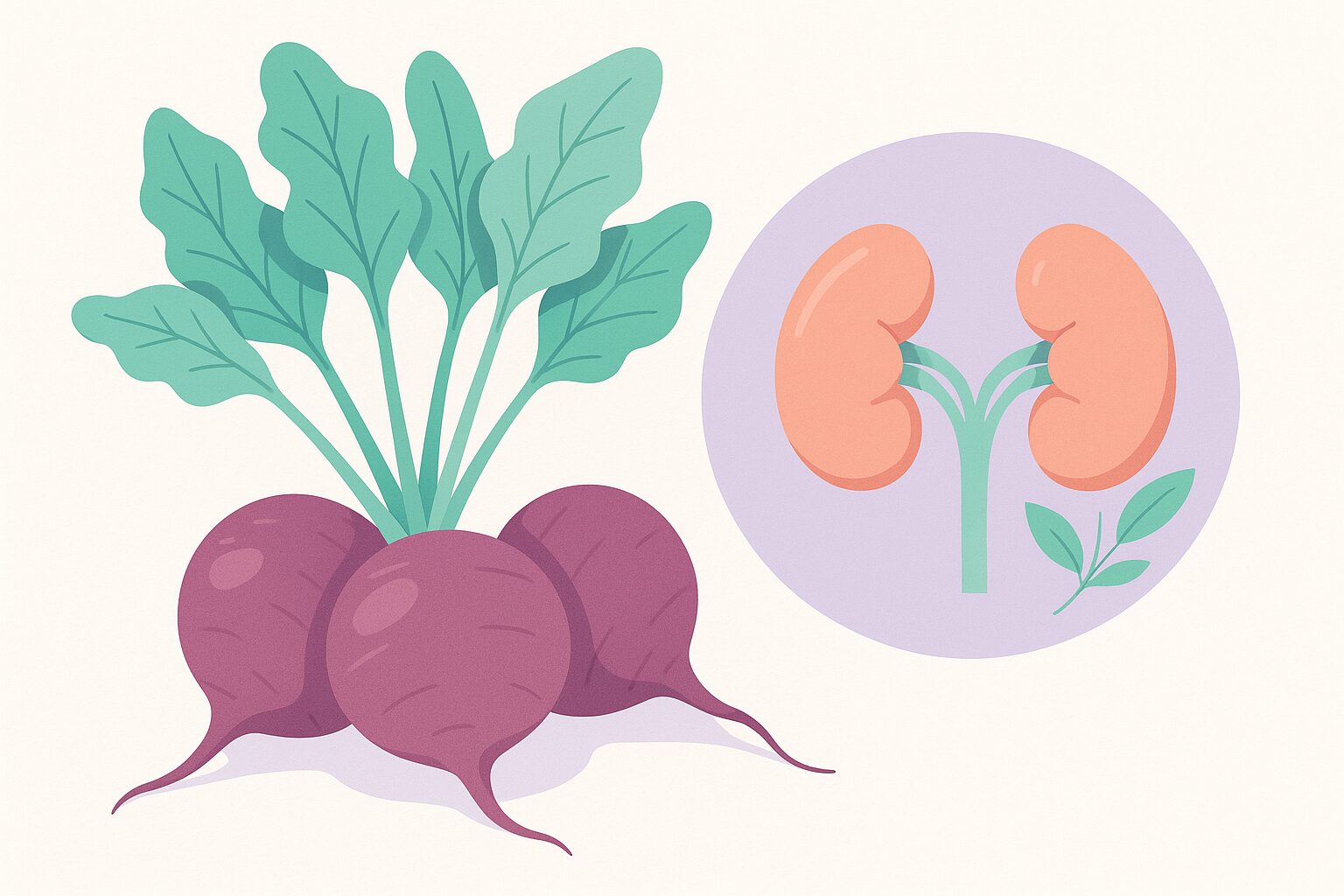
Beets are nutrient-dense and contain dietary nitrates that the body converts to nitric oxide — a vasodilator that improves blood flow, including renal blood flow. They also lower systolic blood pressure modestly. The catch: beets are oxalate-heavy, making them a poor choice for calcium-oxalate stone formers.
Mechanism: nitrate → nitric oxide → vasodilation
Dietary nitrate (NO3⁻) from beets is reduced to nitrite (NO2⁻) by oral bacteria, then to nitric oxide (NO) in the body. NO relaxes vascular smooth muscle, lowering blood pressure and improving renal perfusion. Effect size in trials: ~3–5 mmHg drop in systolic BP from ~500 ml beetroot juice daily.
Beet forms compared
| Form | Effective dose | Pros / cons |
|---|---|---|
| Beetroot juice | 70–250 ml daily | Most studied; sugar load |
| Roasted whole beets | 1 cup (~136 g) | Fiber-rich; lower glycemic |
| Beet powder | 10–15 g daily | Convenient; oxalates concentrated |
| Pickled beets | 1/2 cup | Often high sodium — read labels |
Who should be cautious with beets
- History of calcium-oxalate kidney stones — beets are very high oxalate
- On nitrate-based BP meds — additive hypotension possible
- CKD stage 3+ with elevated potassium — count beets in your daily K budget
- Watch for beeturia (red urine) — harmless but startling
Beets pair well with the broader BP-lowering pattern in our 7-day protocol.
Frequently Asked Questions
Will beets clean my kidneys?
No ‘cleaning’ — but by lowering BP and improving renal blood flow they support long-term kidney health.
Is beet juice safe for kidney stones?
Not if you’ve had calcium-oxalate stones. Choose lower-oxalate alternatives like cabbage or cauliflower.
How long until I notice BP changes?
Acute effect within hours; sustained effect after 4 weeks of daily intake.
Sources & Further Reading
- NIH — Dietary Nitrates and Cardiovascular Health
- National Kidney Foundation — Oxalate and Kidney Stones
- Mayo Clinic — Kidney Stones Prevention
- Cochrane — Dietary nitrate for blood pressure
This article is for educational purposes. James Rivera is a researcher, not a physician. If you have chronic kidney disease (CKD), are on dialysis, take prescription medication, or are pregnant, consult your nephrologist before changing your diet.