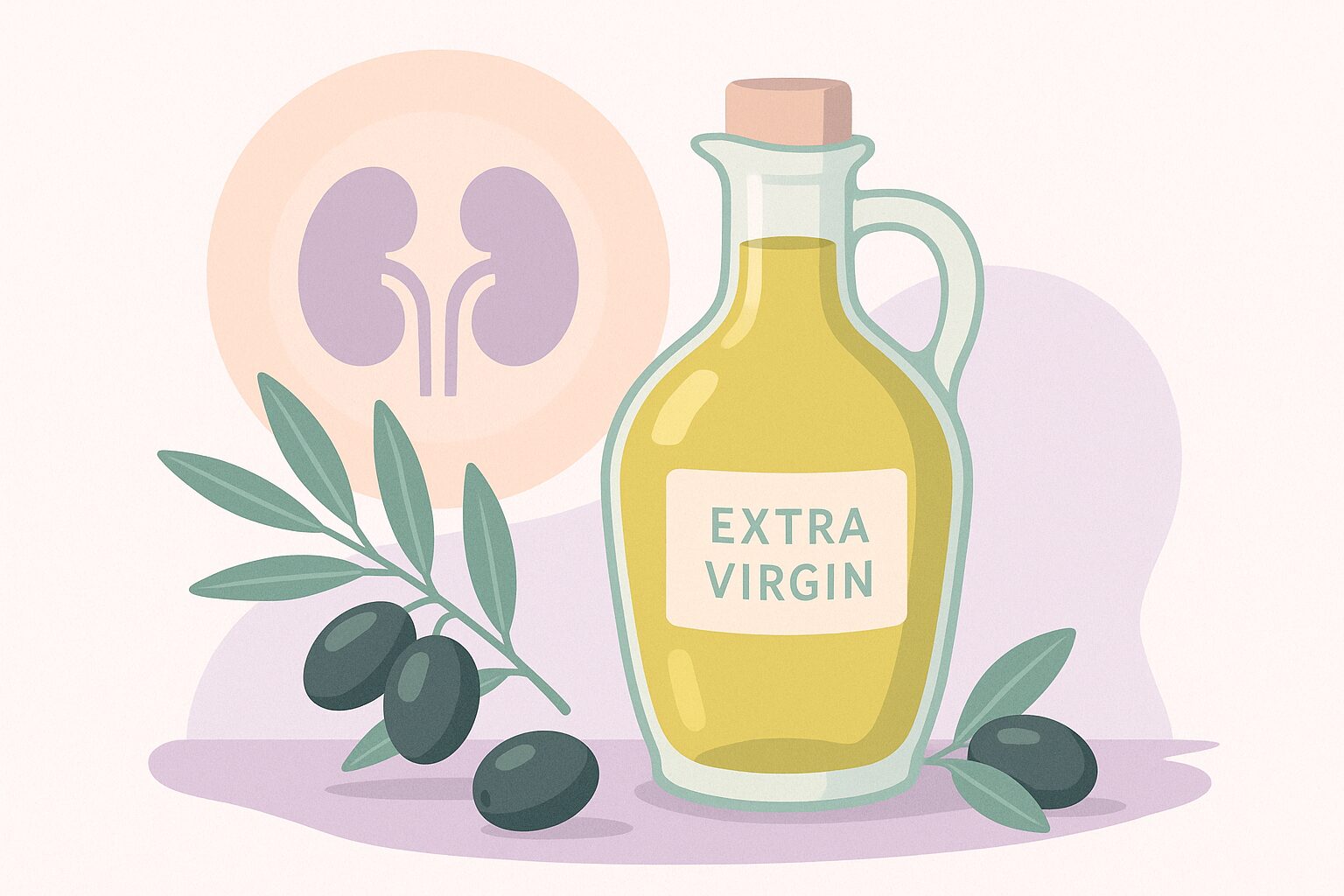
Extra-virgin olive oil (EVOO) is the central fat of the Mediterranean diet and one of the most well-studied foods in cardiovascular and renal medicine. Its phenolic compound oleocanthal has a measurable anti-inflammatory effect comparable to low-dose ibuprofen — without the NSAID kidney toxicity.
How EVOO supports kidney function
- Oleocanthal inhibits COX-1 and COX-2 (anti-inflammatory)
- Improves lipid profile — lower LDL, higher HDL
- Reduces oxidative stress markers in CKD trials
- Improves endothelial function — relevant for kidney microvasculature
How to choose real EVOO
| Marker | What to look for |
|---|---|
| Label | Cold-pressed, single origin, harvest date |
| Acidity | <0.8% (true EVOO grade) |
| Bottle | Dark glass or tin to prevent oxidation |
| Taste | Peppery throat catch = oleocanthal present |
| Storage | Cool, dark, sealed; use within 6 months of opening |
Cooking with EVOO
Despite myths, EVOO is stable for everyday sauteing and roasting up to ~200°C (390°F). Reserve the most peppery EVOO for finishing salads and cooked dishes, where the polyphenols aren’t degraded by heat. Combine with our 7-day protocol for maximum cardiometabolic effect.
Frequently Asked Questions
Is olive oil safe with CKD?
Yes — very low in potassium, sodium, phosphorus. CKD-friendly fat.
Are ‘light’ olive oils okay?
They’re refined and have lost most polyphenols. Stick with EVOO.
Can I substitute avocado oil?
Avocado oil is fine for cooking but lacks the polyphenol density and the PREDIMED-level evidence.
Sources & Further Reading
This article is for educational purposes. James Rivera is a researcher, not a physician. If you have chronic kidney disease (CKD), are on dialysis, take prescription medication, or are pregnant, consult your nephrologist before changing your diet.