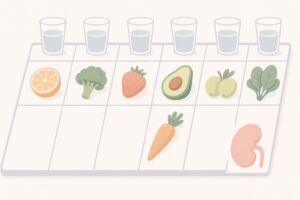
Hydration is the only ‘kidney detox’ with rock-solid evidence behind it. Adequate fluid intake reduces kidney stone risk, lowers UTI risk, and is associated with slower CKD progression in observational studies. The question isn’t whether to hydrate — it’s how much.
Daily targets by group
| Group | Daily fluid target | Source |
|---|---|---|
| Healthy adult women | ~2.7 L total | IOM/NAM |
| Healthy adult men | ~3.7 L total | IOM/NAM |
| Stone formers | Enough for 2.5 L urine | AUA Guideline |
| CKD stage 1–2 | ~2–2.5 L (individualize) | NKF/KDOQI |
| CKD stage 3+ | As advised by nephrologist | NKF/KDOQI |
| Dialysis patients | Strict restriction | Renal team |
How to know if you’re hydrated
- Urine color: pale yellow (straw) = good; clear = possibly over; dark amber = under
- Urine output: ~1.5–2.5 L/day is the healthy range
- Thirst: by the time you’re thirsty, you’re already mildly dehydrated
- Morning weight stability — large swings can signal fluid issues
What counts as ‘fluid’
Plain water is best, but tea, coffee, herbal teas, milk, broth, and watery foods all count. Soda and energy drinks technically count too, but the sugar/sodium load makes them net-negative. Alcohol is dehydrating — don’t count it.
Pair this with the eating pattern in our 7-day protocol for compound benefit.
Frequently Asked Questions
Is it possible to drink too much water?
Yes — hyponatremia from excessive water intake is a real risk, especially in endurance athletes and CKD. More is not always better.
Does coffee count toward hydration?
Yes. Caffeine’s diuretic effect is modest and the net fluid is positive.
How much water for CKD stage 4?
Highly individual — over-hydration can cause edema and worsen heart strain. Follow your nephrologist’s specific prescription.
Sources & Further Reading
- National Kidney Foundation — Water and Kidney Health
- NIH IOM — Dietary Reference Intakes for Water
- AUA Guideline — Medical Management of Kidney Stones
- Mayo Clinic — Water: How much should you drink
This article is for educational purposes. James Rivera is a researcher, not a physician. If you have chronic kidney disease (CKD), are on dialysis, take prescription medication, or are pregnant, consult your nephrologist before changing your diet.