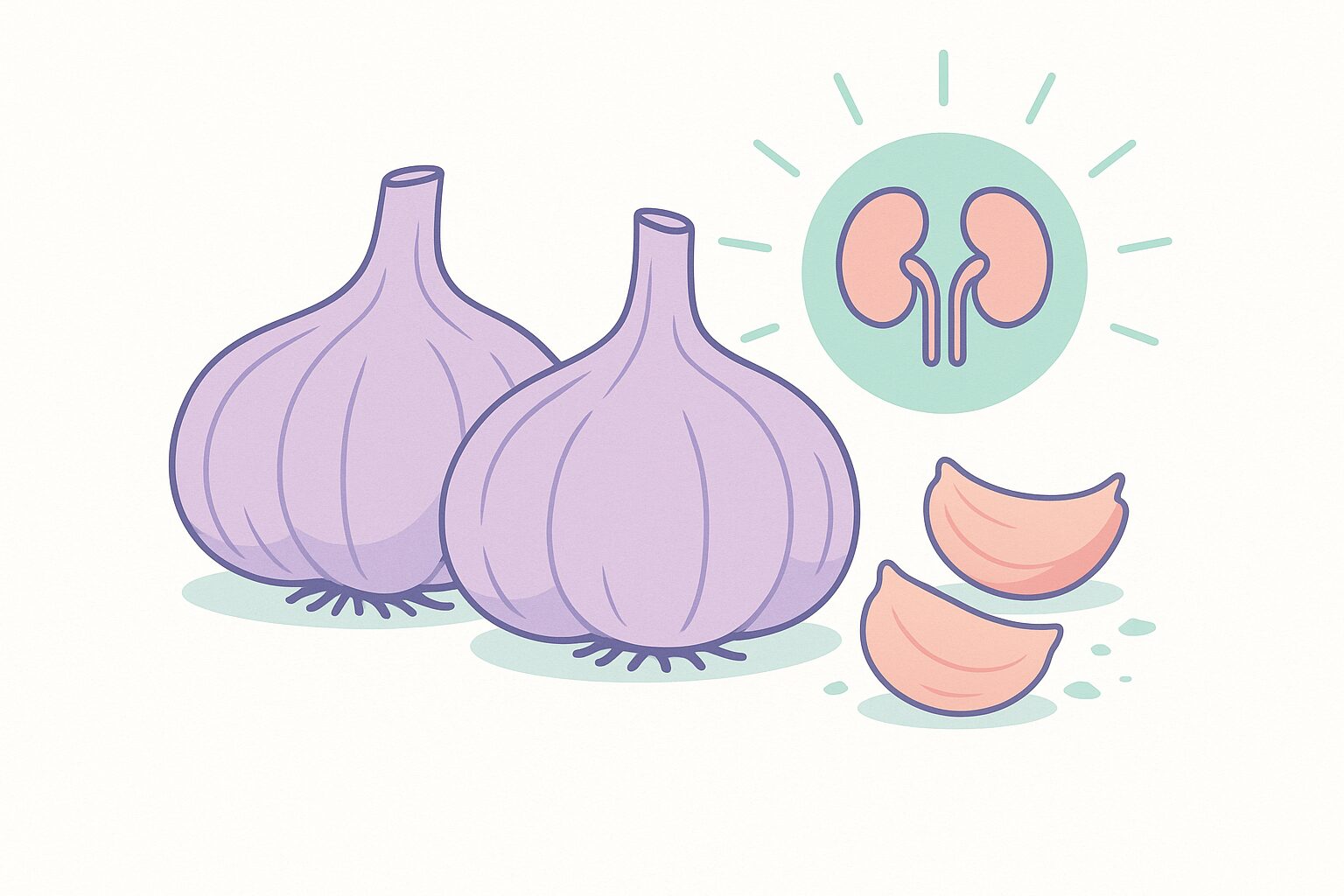
Garlic’s sulfur compounds — primarily allicin, formed when raw garlic is crushed — have measurable anti-inflammatory and modest blood-pressure-lowering effects. Both matter for kidney health: chronic inflammation and uncontrolled hypertension are two of the biggest drivers of CKD progression.
How garlic supports kidney health
- Reduces systolic BP by ~5–8 mmHg in meta-analyses
- Lowers CRP and other inflammation markers
- Improves endothelial function (relevant for kidney microvasculature)
- Mild antiplatelet effect — pro and con
Dosing and preparation
| Form | Effective dose | Notes |
|---|---|---|
| Raw crushed | 1–2 cloves daily | Crush, wait 10 min, add at end of cooking |
| Aged garlic extract | 600–1200 mg daily | Odorless, well tolerated |
| Garlic powder | Limited effect | Allicin degrades during processing |
| Garlic oil capsules | Variable | Stability concerns — check brand testing |
Cautions
- Stop garlic supplements 7–10 days before surgery
- Caution with warfarin, clopidogrel, dabigatran — additive bleeding risk
- Can worsen GERD/reflux in sensitive people
- Not a substitute for prescribed antihypertensives
Garlic is a staple of the eating pattern recommended in our evidence-based pillar.
Frequently Asked Questions
Does cooked garlic still work?
Partially — add crushed garlic at the end of cooking to preserve more allicin.
Will garlic damage my kidneys?
No evidence of kidney harm at culinary or modest supplement doses in healthy adults.
Is one clove a day enough?
For modest BP/inflammation benefit, yes. Many trials use 1–2 cloves equivalent.
Sources & Further Reading
- NIH ODS — Garlic Fact Sheet
- Cochrane — Garlic for hypertension
- National Kidney Foundation — Blood Pressure and Kidneys
This article is for educational purposes. James Rivera is a researcher, not a physician. If you have chronic kidney disease (CKD), are on dialysis, take prescription medication, or are pregnant, consult your nephrologist before changing your diet.