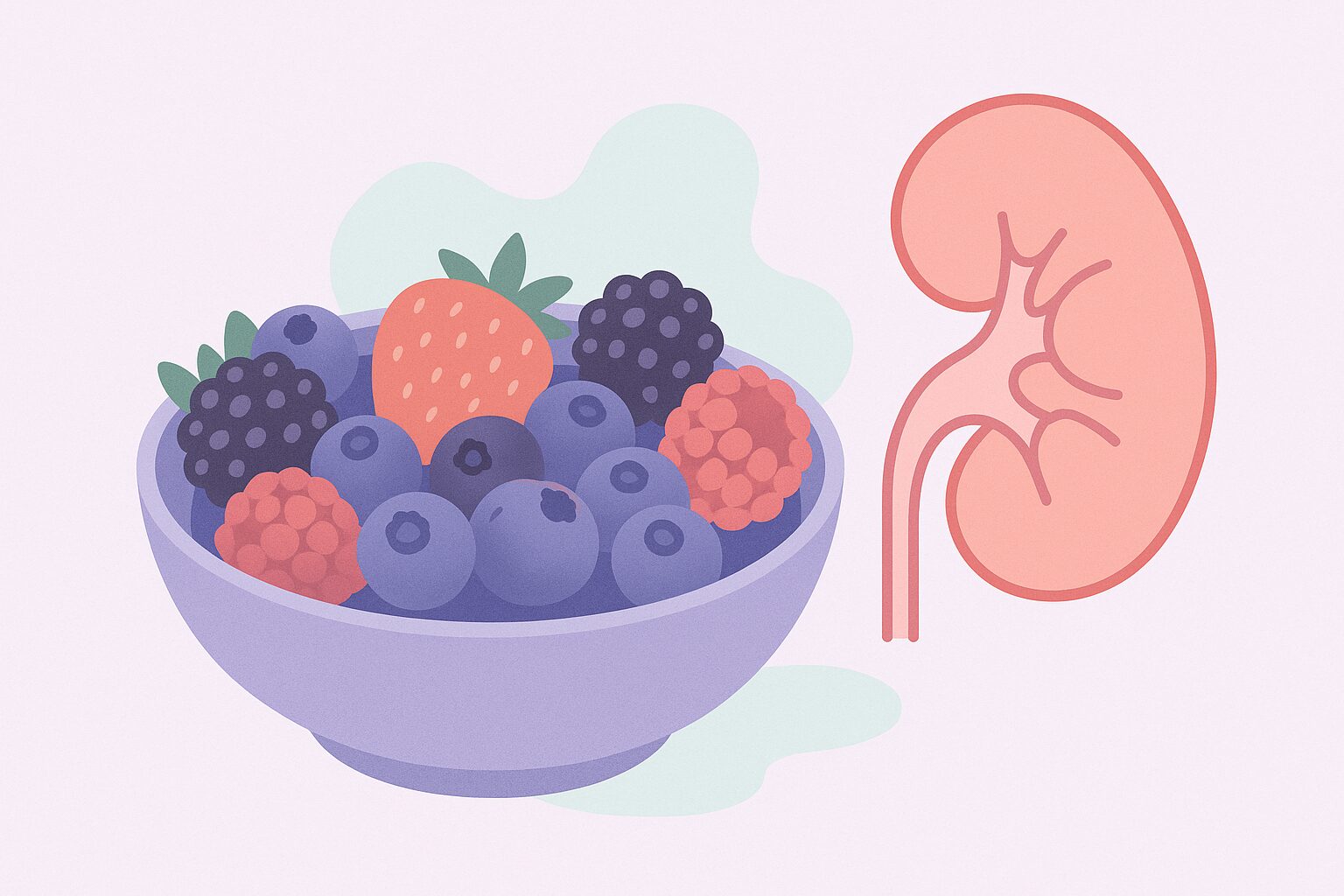
Berries — blueberries, strawberries, raspberries, blackberries — are anthocyanin-dense, low-glycemic, and lower in potassium than most other fruits. Observational studies link higher berry intake to slower eGFR decline, especially in people with hypertension and diabetes.
Berry nutrition vs. high-K fruits
| Fruit (1 cup) | Potassium (mg) | CKD stage 3+ verdict |
|---|---|---|
| Blueberries | 114 mg | Safe in normal portions |
| Strawberries | 155 mg | Safe |
| Raspberries | 186 mg | Safe |
| Banana (1 medium) | 422 mg | Limit |
| Orange (1 medium) | 240 mg | Limit |
| Dried apricots (1/2 cup) | 755 mg | Avoid |
What the eGFR research shows
Long-term observational data (e.g., NHS, NHS II) link higher anthocyanin intake from berries with slower decline in estimated glomerular filtration rate (eGFR), particularly in hypertensive subgroups. These are associations, not proof of causation — but biologically plausible via reduced oxidative stress.
How to add berries every day
- Top morning oats with 1/2 cup berries
- Blend frozen berries with Greek yogurt for a smoothie
- Snack on a small handful instead of dried fruit
- Pair with garlic-rubbed greens at lunch for a kidney-supportive meal
Frequently Asked Questions
Are frozen berries as good as fresh?
Yes — anthocyanin retention is high in commercial freezing. Sometimes better than fresh berries that have aged.
Can I have berries with kidney stones?
Strawberries and raspberries are moderate-oxalate; blueberries are lower. Stone formers should rotate.
How much is too much?
1–2 cups daily is well within any reasonable kidney plan. Sugar content adds up if you go above that.
Sources & Further Reading
- NIH NIDDK — CKD Nutrition
- National Kidney Foundation — Top Kidney-Friendly Foods
- Mayo Clinic — Healthy Eating
This article is for educational purposes. James Rivera is a researcher, not a physician. If you have chronic kidney disease (CKD), are on dialysis, take prescription medication, or are pregnant, consult your nephrologist before changing your diet.