Search ‘kidney detox’ and you’ll find supplement brands promising miraculous cleanses in 3 days. The reality, according to the National Kidney Foundation, is that your kidneys already filter ~180 liters of blood every 24 hours — they don’t need a juice cleanse. What they do respond to is consistent food, hydration and lifestyle support. This 2026 guide walks through the foods with actual peer-reviewed evidence behind them, the ones with weak evidence, and the ones to avoid if you already have reduced kidney function.
What ‘kidney detox’ actually means (and doesn’t)
The kidneys are paired organs that filter waste — urea, creatinine, excess sodium, drug metabolites — into urine. They self-regulate via the renin-angiotensin system and require no external ‘cleansing’. What does damage them: chronic dehydration, uncontrolled high blood pressure, diabetes, NSAIDs at high doses, and dietary patterns high in sodium, ultra-processed phosphates, and animal protein. ‘Detox’ in any honest sense means removing those stressors and adding anti-inflammatory, antioxidant-rich foods that support renal function.
Top evidence-based kidney-supportive foods (2026)
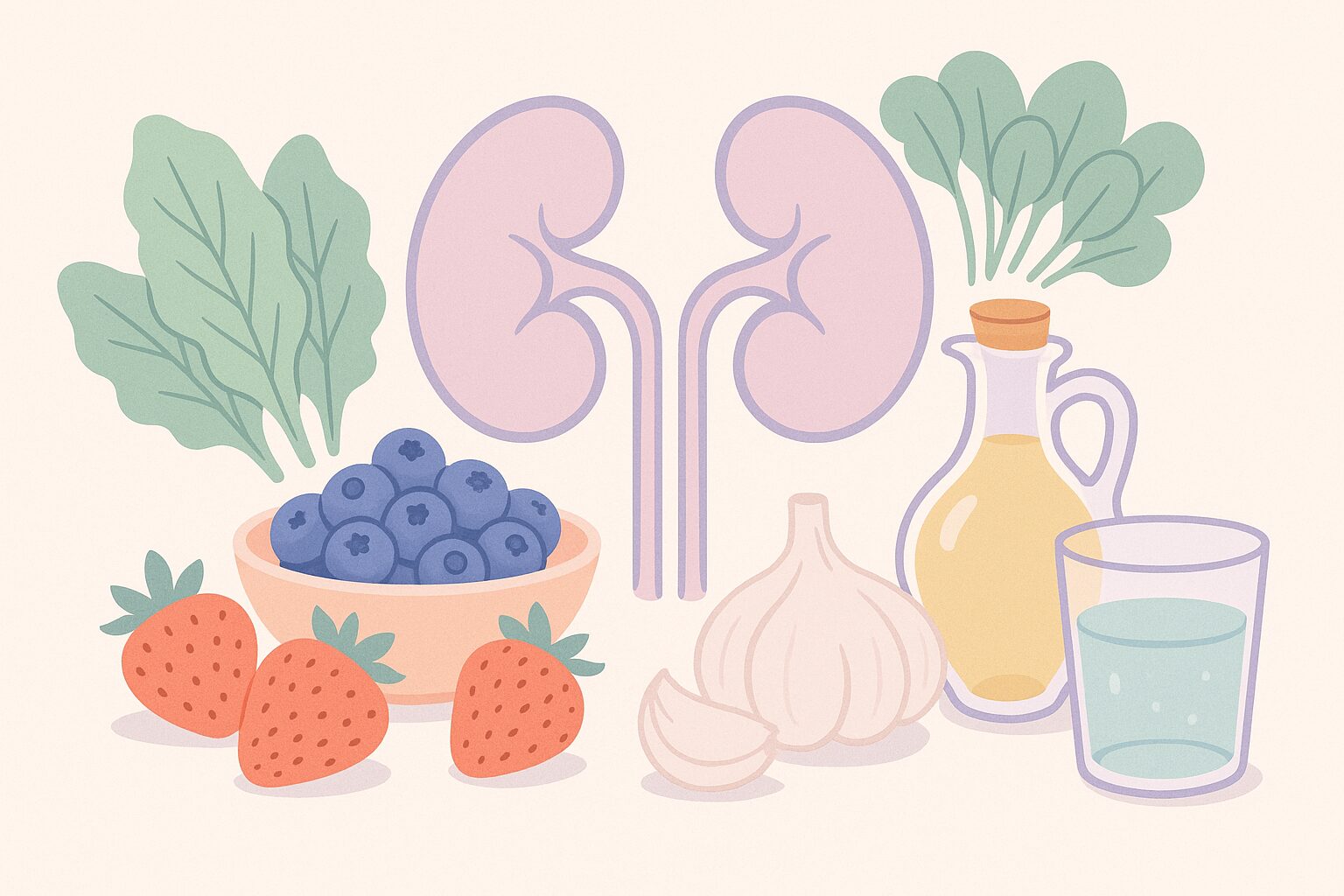
| Food | Mechanism (peer-reviewed) | Evidence strength |
|---|---|---|
| Water | Maintains GFR, dilutes urine, prevents stones | Strong (NKF, NIH) |
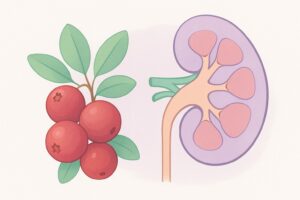
| Cranberries | Type A proanthocyanidins block E. coli adhesion (UTI) | Strong (Cochrane 2023) |
| Berries (blue/strawberry) | Anthocyanins reduce oxidative stress, eGFR support | Moderate |
| Olive oil (EVOO) | Oleocanthal anti-inflammatory, lipid profile | Strong (PREDIMED) |
| Garlic | Allicin reduces inflammation and BP | Moderate |
| Fatty fish (omega-3) | Anti-inflammatory, slows CKD progression | Moderate-strong |
| Cabbage, cauliflower | Low-potassium CKD-safe vegetables | DASH-supported |
| Apples (with pectin) | Soluble fiber binds uremic toxins | Moderate |
Foods with weak or zero evidence
Despite confident marketing, the following have no published RCT support for ‘detoxifying’ kidneys: herbal cleanse blends (often hepatotoxic), high-dose dandelion or burdock root extracts, gallons of celery juice, charcoal capsules, and apple-cider-vinegar ‘flushes’. Some of these are actively dangerous in CKD (high potassium, drug interactions). When in doubt: water > cleanse tea, always.
How this article fits the broader cluster
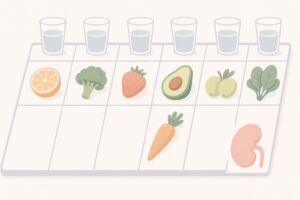
If you want a structured 7-day plan, see our 7-Day Kidney Cleanse Protocol. If you already have stage 3 CKD or higher, start with Foods to Avoid for Kidney Health — what you remove matters more than what you add.
Frequently Asked Questions
Can food actually ‘detox’ my kidneys?
Not in the supplement-marketing sense. But food can either burden the kidneys (high sodium, excess phosphate additives, dehydration) or support them (water, anti-inflammatory foods, balanced potassium). That’s the real ‘detox’.
Is there one single ‘best’ kidney food?
Water. It’s the only thing with mechanistic, observational and trial-level evidence across stone prevention, UTI risk reduction, and CKD progression.
How long until I see kidney benefits from diet changes?
Inflammation markers can shift in 2–4 weeks. eGFR is slow to move — meaningful trends typically need 3–6 months of consistent change plus follow-up labs.
Sources & Further Reading
- National Kidney Foundation — Kidney-Friendly Diet
- NIH NIDDK — Eating Right for Kidney Health
- Mayo Clinic — Chronic Kidney Disease Diet
- Cochrane — Cranberries for UTI prevention (2023)
This article is for educational purposes. James Rivera is a researcher, not a physician. If you have chronic kidney disease (CKD), are on dialysis, take prescription medication, or are pregnant, consult your nephrologist before changing your diet.